
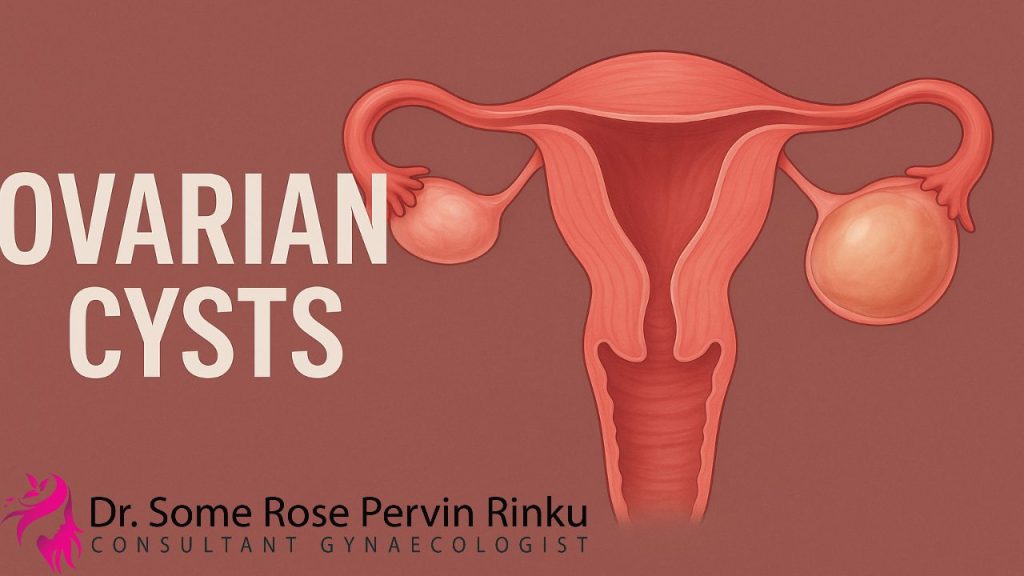
Finding out you have an ovarian cyst can be intimidating. Simply hearing the word “cyst” can be enough to alarm anyone, especially when it comes to the idea that something may be going on in your body that is threatening your health. The good news: ovarian cysts are very common, and many women will get them at some point in their lives. While it is a diagnosis that merits attention, most ovarian cysts are benign and will clear up on their own without any treatment.
In this article, we will discuss all you need to know about ovarian cysts. We’ll look at different types and how to identify ovarian cysts symptoms, as well as when you should call the doctor. Knowing the truth behind these decisions can help you feel more empowered to make healthy reproductive choices.
What Are Ovarian Cysts?
An ovarian cyst is a sac filled with fluid that forms on or inside an ovary. The ovaries are an integral part of the female reproductive system and they produce eggs and hormones. Cysts may develop for a number of reasons, most of which are a part of the normal menstrual cycle.
Every month, the ovaries produce small sacs, called follicles, that contain the developing eggs. Typically, a follicle bursts open to free an egg during ovulation and then shrivels. This process occasionally goes awry and a functional cyst maintains existing and or new inherent ability. These are the kind most people get and are a normal part of ovulation. In some cases cysts develop not as a result of the menstrual cycle, these are termed pathological cysts.
Types of Ovarian Cysts
Ovarian cysts can be classified in two categories: functional and pathologic. Explaining the distinction is essential to knowing what might be ahead.
Functional Cysts
These are the most frequent of the ovarian cysts and are related to the menstrual cycle. These tumors are nearly always non-cancerous.
- Follicular Cysts: These develop when a vesicle does not break open and release its egg during ovulation. Instead it keeps growing to form a cyst. Follicular cysts are often asymptomatic and resolve spontaneously within one to three months.
- Corpus Luteum Cysts: After a follicle releases its egg, it becomes a structure known as the corpus luteum. If the shell in which the egg burst open places a closure seal on it, for some reason (including hormone balance), it is possible that some residual fluid stays in the shell, and then a corpus luteum cyst can form. These too usually go away on their own but may be painful or bleed.
Pathological Cysts
These cysts are infrequent and not influenced by the menstrual cycle. Most of them are benign but some may have the potential to be cancerous.
- Dermoid Cysts: develop from embryonic cells and may include tissues such as hair, skin, or teeth. With a cancer risk of less than 1 percent, they are almost never cancerous, but they can become large and uncomfortable.
- Cystadenomas: these form on the surface of an ovary and are filled with watery or mucous like liquid. They can grow quite large, often requiring surgery.
- Endometriomas: This develops due to endometriosis, in which tissue that is similar to the lining of the uterus grows beyond it. When this tissue attaches to an ovary, it can create a cyst, which may be referred to as a “chocolate cyst.
Recognizing Ovarian Cysts Symptoms
Some women with ovarian cysts do not experience any symptoms. The cysts are frequently found incidentally, during a routine pelvic examination or a scan done for another reason. But when symptoms do develop, they can differ from person to person.
Common ovarian cysts symptoms include:
- Mild or severe pain in the pelvic area on the side of the cyst
- Fullness, pressure, or an aching or burning sensation in the abdomen
- Bloating or abdominal swelling
- Pain during intercourse (dyspareunia)
- Menstrual periods that are irregular, heavier or lighter than normal
- Trouble emptying your bladder or bowel all the way
Some symptoms are a red flag for a more serious problem, like a ruptured cyst or ovarian torsion (when a large cyst causes an ovary to twist). Get emergency medical help if you have any of these signs of an allergic reaction:
- Sudden sharp pelvic or belly pain
- Pain w/ fever or vomiting
- Dizziness, weakness, or feeling faint
- Rapid breathing
How Ovarian Cysts Are Diagnosed
Testing and diagnosis of an ovarian cyst Usually, an ovarian cyst is found during a routine exam. If a cyst is suspected, one or more of the following tests may be advised by your doctor.
- Pelvic Exam: During a routine pelvic exam, a doctor can feel if you have a cyst on your ovary.
- Ultrasound: This is the easiest to scan test to pick up carotenoid cyst. During an ultrasound, sound waves are used to produce images of your internal organs, which enables your doctor to see the cyst’s size, shape, location, and composition (if it’s solid or filled with air).
- Blood Tests: If a cyst looks complex on an ultrasound, your doctor may recommend a CA-125 blood test. High levels of this protein may be related to ovarian cancer, but other noncancerous conditions can also cause the level to increase. This is a test that is often offered to postmenopausal women or those at higher risk.
Treating Ovarian Cysts: Your Options
Ovarian cyst treatment right for you depends on your age, and the type and size of the cyst, among other considerations. Your doctor can help you figure out the best way to go.
Watchful Waiting
For most premenopausal women with simple fluid-filled cysts, the best approach is often to wait and watch. Your doctor may recommend a follow-up ultrasound in several weeks or months to determine if the cyst has decreased in size or if it has completely resolved.
Medications
No medication will make an already existing cyst go away, though hormonal contraceptives like birth control pills can also be prescribed. These may prevent new cysts from developing by suppressing ovulation. Over-the-counter pain relievers can help alleviate ovarian cyst pain.
Surgical Options
If a cyst is large, painful, or seems suspicious on an ultrasound, surgery may be suggested.
- Cystectomy: This is the removal of the cyst only, leaving the ovary intact.
- Oophorectomy: The entire affected side ovary is removed in this surgery. This is required for larger or possible cancerous cysts.
The surgeries are usually done laparoscopically, which means they are minimally invasive (small incisions and camera) and the patient recovers quickly.
When to See Your Doctor
It’s vital to listen to your body and fight for your health. You are having ongoing symptoms such as pelvic pain or pressure, bloating or changes in your menstrual cycle. Persist your doctor or gynecologist will make a follow-up appointment if you experience.
“Gynecological exams are an important and necessary aspect of overall reproductive health. These appointments are a chance to talk about anything that might be concerning you and can help catch things like ovarian cysts earlier. Do not let fear or uncertainty prevent you from getting the care you need
Taking Control of Your Ovarian Health
Although finding out you have an ovarian cyst can be anxiety-inducing, keep in mind that most are benign and treatable. Once you understand the causes, symptoms and various treatment options, you can take the first steps to feeling in control. The most favorable results are achieved when it is detected early and properly treated.
Keep the lines of communication open with your health care provider, monitor your symptoms and don’t hesitate to ask for help if something doesn’t feel right. As long as you are informed and taking the right precautions, you know where you stand in your ovarian health journey.