
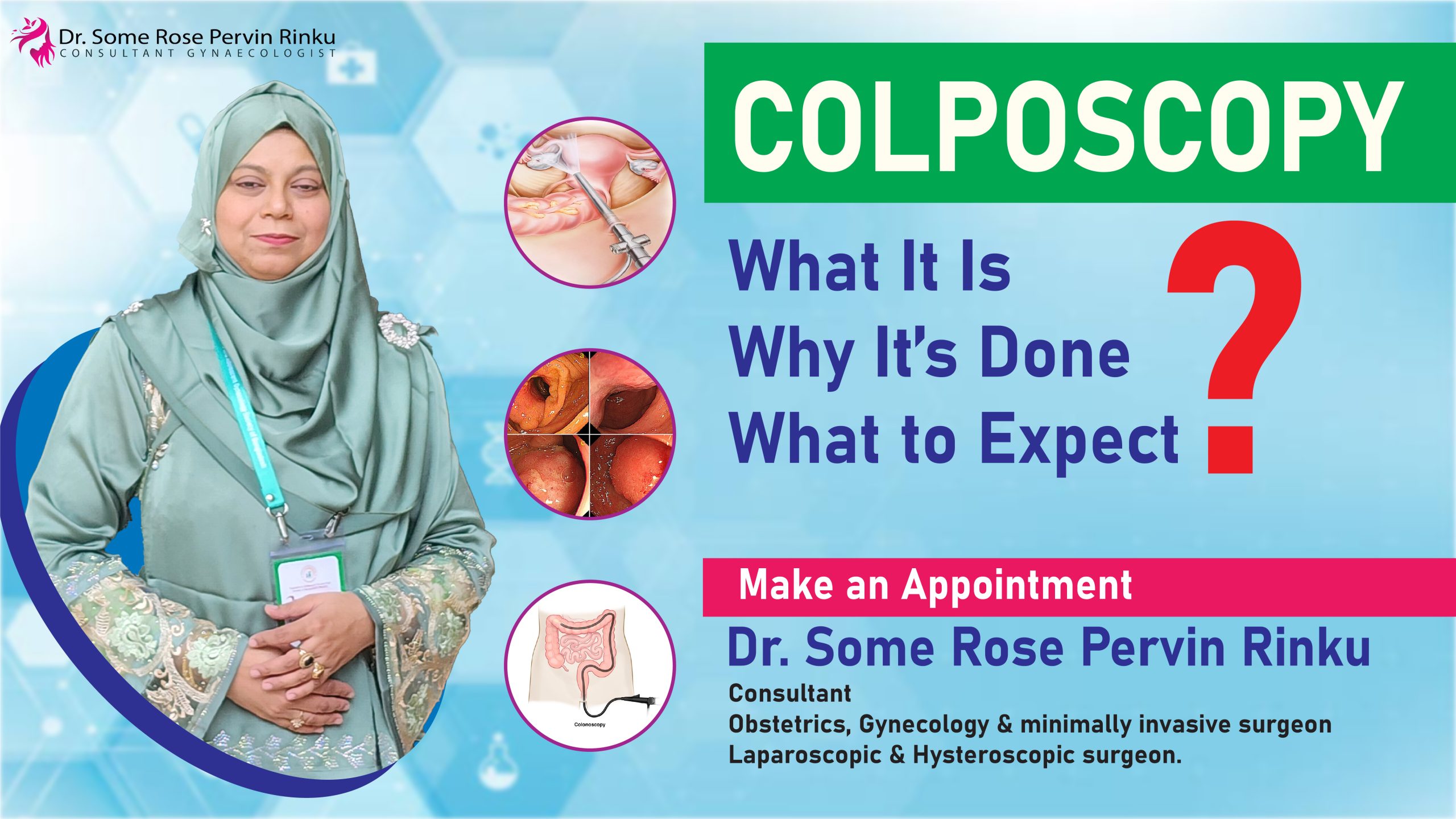
If you have recently been advised to have a colposcopy by your physician, you could be feeling nervous or unsure about what to expect. That’s completely normal. The Medical Term that Freaks Women Out So many women feel frightened when they first hear this term, but knowledge of the procedure will help dispel your fears, and get you ready for what to expect.
A colposcopy is a simple, office-based procedure your provider uses to examine your cervix, vagina, and vulva more closely. So, you can think of it as a close-up scan that helps doctors spot any abnormal cells or changes in tissue that may need to be checked. Though the name may make it seem intimidating, the process is relatively simple and shouldn’t cause more than mild discomfort.
This ultimate guide will take you through everything you need to know about colposcopy. You’ll discover when your doctor might order this procedure, what happens during the examination and how to prepare for your appointment. By the end, you’ll be a little calmer and better informed about this crucial diagnostic tool.
Understanding Colposcopy: A Closer Look
A colposcopy is an examination to closely inspect your cervix, vagina and vulva using a special microscope called a colposcope. The colposcope is as big as a microscope and stays outside your body while you lie back and put your feet up in stirrups.
In this test, your doctor will put a mild solution of vinegar on your cervix. This solution makes abnormal cells show up white, so it is easier to see them. Your provider can see which areas might need a closer look or treatment.
The process itself can usually be completed in 10 to 20 minutes, and it’s done in your doctor’s office. Anesthesia isn’t usually required for a typical colposcopy, although your doctor could apply a local numbing solution if they need to take a tissue sample.
Why Your Doctor Recommends Colposcopy
There are many reasons your healthcare provider may recommend a colposcopy, but the most frequent is an abnormal result from a Pap smear. These are among the most common scenarios that justify this examination:
Abnormal Pap Smear Results
The most common reason for colposcopy is an abnormal Pap test. Your doctor won’t know what to do unless this one result is placed in the proper context to determine if it’s significant and requires action. This determination is best made with the aid of a colposcopy.
HPV Testing Results
If you’re positive for high-risk types of human papillomavirus (HPV), especially types 16 and 18, your doctor may advise colposcopy even if your Pap test looks normal. So, these types of HPV are linked to an increased risk of cervical cancer.
Visible Abnormalities
From time to time, during a standard pelvic exam, your doctor will see areas on your cervix, vagina or vulva that look suspicious and should possibly be investigated further. A colposcopy may be used to check if these areas need treatment.
Follow-up After Treatment
If you’ve had treatment in the past for abnormal cells on your cervix, your doctor can also use colposcopy to keep an eye on your healing and ensure treatment was successful.
Preparing for Your Colposcopy Appointment
Preparation is the key to making the most of your colonoscopy, as well as making the experience more comfortable. Here’s what you need to know before your appointment:
Timing Your Appointment
Make an appointment for your colposcopy when you’re not menstruating. If your periods are heavy, it may be difficult for your doctor to get a good view of your cervix. If you have irregular periods, talk with your healthcare provider about the timing that’s best for you.
What to Avoid Before Your Appointment?
For 24 to 48 hours before your colposcopy, avoid:
- Sexual intercourse
- Douching
- Using tampons
- Applying vaginal medications or creams
- Taking baths (showers are fine)
Those activities can disrupt the exam or they may make it more difficult for your doctor to see abnormal areas clearly.
Managing Discomfort
Take a list of your medications and any questions you want to ask your doctor. You may also want to bring a pad, because you might have some light spotting following the procedure.
What to Bring
Take a list of your medications and any questions you want to ask your doctor. You may also want to bring a pad, because you might have some light spotting following the procedure.
What Happens During the Procedure?
Knowing what to expect at each step may alleviate some anxiety about your colposcopy. Here’s what you can expect:
Getting Started
You’ll be asked to undress from the waist down and change into a hospital gown. Your doctor will have you lie on an examination table with your feet in stirrups (as in a pelvic exam or Pap smear).
The Examination Process
Your doctor will use a speculum to spread apart your vagina, as they would during a Pap test. The colposcope is then placed outside of your body to enable a close-up view of your cervix.
Your healthcare provider will then swab your cervix with a vinegar solution. This may create a mild burning or tingling feeling that passes quickly. The vinegar solution makes any abnormal areas white and stand out.
Taking a Biopsy
If your doctor notices areas that appear irregular, they may take a small sample of tissue, called a biopsy. This requires extracting small pieces of tissue with special instruments. You may experience a shot sensation, like that from a needle prick for drawing blood.
The samples are sent to a lab for analysis and results come back within a week or two.
After Your Colposcopy: What to Expect
For most women, they can resume their normal activities right after a colposcopy. However, a few caveats:
Normal Side Effects
If you had a biopsy, you will have some light spotting for a few days, especially. You may also see a dark discharge, which can be due to a unique solution your doctor may have applied to prevent bleeding.
A few women have mild cramps, similar to those during a heavy period. This usually passes within a day or two.
When to Call Your Doctor
Contact your healthcare provider if you experience:
- Heavy bleeding (soaking more than one pad per hour)
- Severe abdominal pain
- Fever over 100.4°F (38°C)
- Foul-smelling discharge
- Signs of infection
Activity Restrictions
If you had a biopsy, your doctor might recommend avoiding:
- Sexual intercourse for a few days
- Heavy lifting
- Strenuous exercise
- Swimming or bathing (showers are okay)
These restrictions help prevent infection and allow the biopsy site to heal properly.
Understanding Your Results
Your colposcopy findings will inform your doctor on the course of treatment to take. Here’s what some different results could mean:
Normal Results
If your colposcopy is normal, you may return to regular screening or for slightly more frequent follow-up, depending on what prompted the initial colposcopy.
Abnormal Results
Do not assume that abnormal findings imply cancer. Many of these abnormal cells are precancerous, which can turn into cancer over time but are not cancerous now. Your doctor will talk with you about treatments, depending on the type and severity of the changes in your cells.
Need for Treatment
If treatment is required, then your doctor will discuss your treatment options. These may be interventions that cut or freeze away abnormal tissue, such as LEEP (Loop Electrosurgical Excision Procedure) or cryotherapy.
Moving Forward with Confidence
A colposcopy can play a key role in the maintenance of your reproductive health. Though it can certainly be overwhelming to be recommended you go in for this procedure, it comes with the peace of mind that you are proactively addressing any problems before they escalate.
The test itself is fast and usually quite manageable, and it offers important insight into your wellbeing. For the vast majority of women, their ‘worry’ about the colposcopy is worse than the colposcopy itself.
Feel free to ask your healthcare provider any questions you have about the procedure. Knowing what’s going to happen can help you feel more at ease and prepared. Always keep in mind that investing in your health by getting screened and following up when your provider recommends it can be one of the best investments we make in our own future health.



