
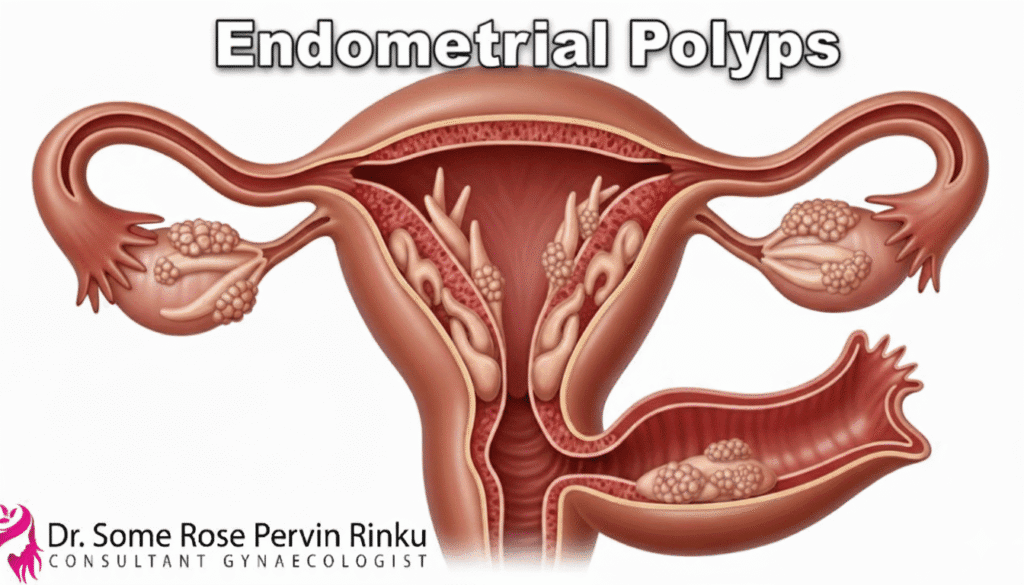
Endometrial Polyps are small, stalk-like growths that grow on the inside lining of the womb. Although the name may sound scary, these growths are usually benign and more common than you might imagine. Endometrial polyps occur in up to 25% of women and are more common in women older than 40 years.
Endometrial polyps are found in many women during routine gynecologic exams or in an evaluation of symptoms such as irregular bleeding. The good news is that the overwhelming majority of polyps are benign and curable. But knowing the signs, sources, and treatments can empower you to take control of your personal reproductive health.
This complete guide will explain everything you need to know about endometrial polyps, from identifying early warning signs to considering treatment options that might be best for you.
What Are Endometrial Polyps?
Endometrial polyps are growths that develop in the endometrium, the inner lining of your uterus. These lesions may be of very different sizes, from a few millimeters up to several centimeters in diameter. Some women have only one polyp, while others have more than one growth.
The shape of these polyps are best described as small mushrooms or teardrops connected to the lining of the uterus (womb) by either a thin stalk or flat base. They are composed of endometrial tissue, blood vessels and connective tissue. Most endometrial polyps are small and do not produce symptoms, although larger ones can alter your menstrual cycle.
Common Symptoms to Watch For
Irregular Menstrual Bleeding
The most common symptom related to endometrial polyps is abnormal vaginal bleeding. This might include:
- Menstrual periods are heavy and last longer than normal
- Bleeding between periods (spotting)
- Periods that come more often than every 21 days
- Bleeding after menopause
Other Notable Symptoms
Beyond abnormal bleeding patterns, endometrial polyps may result in:
Pelvic Pain: A few women may have cramps or other pain in the lower abdomen during menstruation.
Fertility Worries: Big polyps can obstruct implantation or the movement of sperm, and those can impact your odds of getting pregnant.
Abnormal Discharge: You may notice changes in the amount of vaginal discharge as well as in the texture of the discharge.
It is important to note that many women who have small endometrial polyps don’t have any symptoms at all. They are frequently asymptomatic and are sometimes incidentally discovered on pelvic examination or in the course of imaging studies for unrelated causes.
Understanding the Causes
Hormonal Factors
Estrogen is a critical factor in the development of the polyp. Your endometrium is sensitive to changes in hormones that occur during your menstrual cycle, so when you receive too much estrogen, you may produce too much endometrial tissue. This fact may account for the peak incidence of endometrial polyps in various periods of life when there are major hormonal changes.
Age and Risk Factors
There are several factors that can make it more likely for you to develop endometrial polyps:
Age: The risk is higher in women aged 40 to 50 years, but the reality is that polyps can occur at any age after puberty.
Obesity: Too much body weight increases the level of estrogen, which creates conditions that encourage polyps to grow.
High blood pressure: Hypertension is associated with a higher risk of polyps, though research is still ongoing to confirm this connection.
Tamoxifen: Tamoxifen, used to treat breast cancer may have estrogen effects on the uterus and may cause polyps.
Family History: Women may be genetically predisposed to endometrial polyps.
Diagnosis Methods
Initial Evaluation
Your doctor will start with a thorough medical history and physical examination. They will inquire about your menstrual history, symptoms, medications and family history. Larger polyps may be detectable on pelvic exams but smaller ones may need specialized imaging.
Imaging Studies
Transvaginal Ultrasound : The first-one is the transvaginal ultrasound, used to check the uterine lining. It’s non-invasive, and can detect thicknesses or irregular shapes that can indicate polyps.
Saline Infusion Sonohysterography: Sterile saline is inserted into the uterus during ultrasound, which makes the uterine cavity easier to see and any growths inside the cavity easier to identify.
Magnetic resonance imaging (MRI): MRI may be done if CT scan does not work or cannot provide satisfactory images.
Definitive Diagnosis
Hysteroscopy: This procedure uses a thin, lighted camera that is inserted through the cervix and allows the doctor to see into the uterus. It’s considered the diagnostic gold standard for endometrial polyps and can often be a therapeutic one as well.”
Endometrial Biopsy: Your doctor eliminates a small piece of tissue from your uterus to checked for additional possible diseases, meanwhile your symptoms might not be due to postmenopausal bleeding (PMB) nonetheless could result from other conditions.
Treatment Options
Watchful Waiting
In premenopausal women, small, asymptomatic endometrial polyps frequently do not need immediate intervention. Your physician may suggest occasional monitoring with ultrasounds or exams. Some small polyps may shrink or disappear without treatment, particularly after menopause, when levels of the hormone estrogen drop.
Medications
Hormonal Treatments: Progestins or GnRH (gonadotropin-releasing hormone) agonists may be used to cause polyps to shrink, but they often return after treatment is discontinued. Surgery can be deferred for a few weeks with these drugs, or they can be used in women who are not candidates for surgery.
Pain Management: Polyp pain and associated cramping can be relieved with over the counter pain medications.
Surgical Removal
Hysteroscopic Polypectomy: A minimally invasive procedure to remove polyps with instruments that are inserted through the cervix. It’s an outpatient procedure and has high success rates with only a short recovery time.
Dilation and Curettage (D&C): The uterine lining is scraped free of polyps. Though it works, contact hysteroscopic removal is not as accurate as hysteroscopic removal and can leave behind smaller polyps.
Hysterectomy: If polyps continue to return or other factors are involved, you may be advised to have a hysterectomy.
Recovery and Prevention
Post-Treatment Care
Polyp removal is generally easy to recover from. The majority of women can resume normal activities within a few days, though you might want to avoid heavy lifting and sexual activity for up to a week. Some spotting or light bleeding for a few days after the procedure is normal.
Preventing Recurrence
Endometrial polyps can’t be completely prevented, but there are some lifestyle changes that can lower your risk:
- Eating well and staying active to keep a healthy body weight
- Control of blood pressure and other risk factors for cardiovascular disease
- Talking to your healthcare provider about hormone options
- Going for gynecologic check ups regularly for early diagnosis
When to Seek Medical Attention
Make an appointment with your doctor if you have:
- Bleeding that is so heavy that you have to change your pad or tampon every hour
- Any bleeding between periods, or after menopause
- Pelvic pain that disrupts normal activity
- When you’re having trouble getting pregnant after 6 to 12 months of trying
Do not overlook lingering symptoms or accept them as a natural part of growing older. Treatment as early as possible can help prevent complications and enhance your quality of life.
While endometrial polyps can sound scary, it’s important to keep in mind that they’re typically benign and very treatable. By collaborating with your healthcare providers, you’ll receive tailored care to meet your unique needs and concerns. With proper management, most women with endometrial polyps can expect excellent outcomes and return to normal menstrual function.