
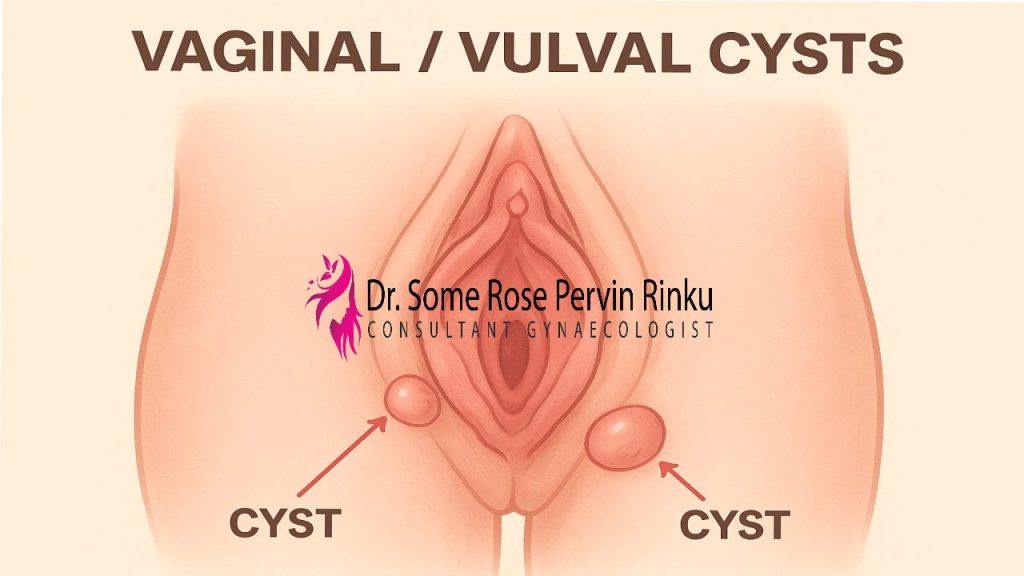
Finding a lump or bump in the vaginal area can be frightening, however you should always see a doctor to get a proper diagnosis. It’s a topic that is delicate and many people are uncomfortable speaking of. But it’s worth noting that vaginal cysts are relatively common: They affect up to 2% of women at some point in their lives. Although it can be frightening to discover a cyst, the vast majority are benign, or not harmful, and can be treated.
Knowing the differing types of cysts can empower you to feel more in control of your health. The former is found inside the vagina and the latter is present on the outside (as on labia). This guide will detail each of the types of cysts, the symptoms, when you should make an appointment with a doctor, and treatments that are available to provide you with clarity and peace of mind.
Understanding Vaginal and Vulval Cysts: The Basics
So, what are these cysts anyway? Cyst A cyst is a closed sac, having a distinct membrane and division compared with the nearby tissue. They can arise inside or outside the vagina for a range of reasons. Cysts in the vagina occur on or under the lining of the vagina; whereas in the vulva occur on the external genitals of a woman.
Though the sound of a cyst can be scary, these pimples rarely don’t pose any harm. Many are small, cause no symptoms and may go away on their own. They are the mainstay of women’s health and are not cancer–causing. One of the most important things, though, is to visit a healthcare provider for a correct diagnosis to exclude other causes and to consider the best treatment method.
Types of Vaginal and Vulval Cysts
Cysts can develop due to clogged glands, trauma or residual tissue from developing. Here are some of the leading varieties you should be familiar with.
Bartholin Cysts
The Bartholin glands are a pair of tiny glands on either side of the vaginal opening. Their primary function is to produce fluid that is used to lubricate the vagina. If the opening of one of these glands is blocked, fluid accumulates and forms a painless swelling on one side of the vaginal opening known as a Bartholin cyst. These represent the majority of vulval cysts. A Bartholin abscess occurs if a cyst becomes infected.
Vaginal Inclusion Cysts
They are the most frequent of vaginal canal cysts. Vaginal inclusion cysts are small and are the result of a wound or bruise to the vaginal walls. For example, they can develop after giving birth (from a tear or an episiotomy) or after a procedure. They develop when a small part of vaginal skin tissue becomes entrapped and a cyst forms.
Skene’s Gland Cysts
Skene’s glands are situated on either side of the urethra, and also help lubricate the urethra. Like Bartholin cysts, a Skene’s gland cyst comes about when the gland’s duct becomes obstructed. These are far less frequent, but can lead to discomfort or problems with urination if they reach a certain size.
Other Less Common Types
- Gartner Duct Cysts: These are located on the walls of the vagina and are formed from residual tissue from when a woman was still in her mother’s womb.
- Sebaceous Cysts: These are those hard little lumps which can occur on the vulva when sebaceous (oil-producing) glands clog up.
- Mucinous (Mucin-Containing) Cysts: These are a type of cyst that forms from mucus-producing cells.
Recognizing the Symptoms
A lot of vaginal and vulval cysts are asymptomatic, which is to say they don’t cause symptoms of any kind and are typically discovered during a routine pelvic examination. If there are symptoms, they may differ depending on the size, location or whether the cyst is infected.
Common symptoms include:
- A small, painless mass or swelling in the vagina or on the vulva.
- Edema or erythema at the site of injury.
- The association of sex with pain or discomfort.
- Discomfort or pressure when walking, sitting, or inserting a tampon.
One type, a Bartholin cyst, could result in a painful lump by the vaginal opening. If it gets infected (a condition called an abscess), it can feel very painful and the skin around it is very sensitive.
Thinking About Hysteroscopy? Here’s Everything You Should Know
When to See a Healthcare Provider
You should avoid self-diagnosing any lump on the genitals. For a proper diagnosis, it is always recommended to consult a doctor. For the most part, cysts are innocuous, but it’s best to make an appointment if you find a new lump, if the lump is growing, or if it’s causing any kind of ache.
Seek immediate medical attention for these red flag symptoms:
- Pain is so intense that it disrupts your daily life.
- Fever or chills, a possible indicator of an infection.
- A rapidly growing lump.
- A rupturing (pus-draining) cyst.
Regular gynecologic exams are paramount as well. They also create a chance for your doctor to find cysts or other issues early, even before you might notice any symptoms yourself.
Vulval Cysts Treatment Options
Treatment will depend on what kind of cyst you have, how big it is and whether it is causing any symptoms or is infected. The options are as varied as at-home care to minor surgeries.
Conservative Management
If a cyst is small and asymptomatic (not causing trouble), you may be able to wait it out, according to the American College of Obstetricians and Gynecologists. Most cysts are small and may resolve spontaneously. Home treatment can be effective for mild pain. Warm sitz baths, where the area is soaked in a few inches of warm water for 15 minutes a few times a day, can help soothe the area and also encourage small, infected cysts to burst and drain on their own.
Medical Treatments
- Antibiotics: If the cyst is infected or an abscess has developed, your doctor probably will recommend antibiotics to clear the infection.
- Drainage: If the Bartholin cyst or abscess is large or painful, a doctor might make a small incision to drain it. This usually means cutting a small hole in the cyst and letting the fluid drain out. A tiny catheter can be placed for several weeks to keep it patent and allow it to drain completely.
- Marsupialization: If your Bartholin cysts keep returning, your doctor may suggest the procedure marsupialization. The doctor cuts a tiny hole in the cyst and stitches the edges of the incision, creating a permanently small opening through which fluid will not accumulate again.
- Surgery: Very rarely (and usually only if the cyst is large, persistent, or otherwise worrisome) the whole pouch or gland has to be removed in a small, simple operation.
Post operation your doctor will issue post-op instructions to ensure that you heal well and to avoid infections.
Prevention and Long-term Management
Although not all cysts are preventable, good hygiene and safe sex practices — including good hydration — can help lower the risk of infection-related cyst formation (which may contribute to some types, such as Bartholin abscesses).
The risk of recurrence of a cyst depends on its type. Re-occurrence rate of vaginal inclusion cysts is rare after removal; however, the rate of re-occurrence of bartholin’s cyst is high. If you keep getting cysts, your doctor may talk to you about long-term management options. With regular self-exams, you can become familiar with your body and detect new changes early.
Take Control of Your Health Today
If you can understand vaginal and vulval cysts, you can ensure that you own and take the lead on your health. Keep in mind that most of these cysts are benign, are treatable. And that it’s important to get a diagnosis by a professional. You should not let fear or shame prevent you from seeking medical attention.
Should you notice a lump, or have any of the symptoms that have been mentioned, make an appointment to see your doctor. Talking about your sexual health is a normal and crucial part of being healthy. By being proactive, you guarantee the care and peace of mind you deserve.