
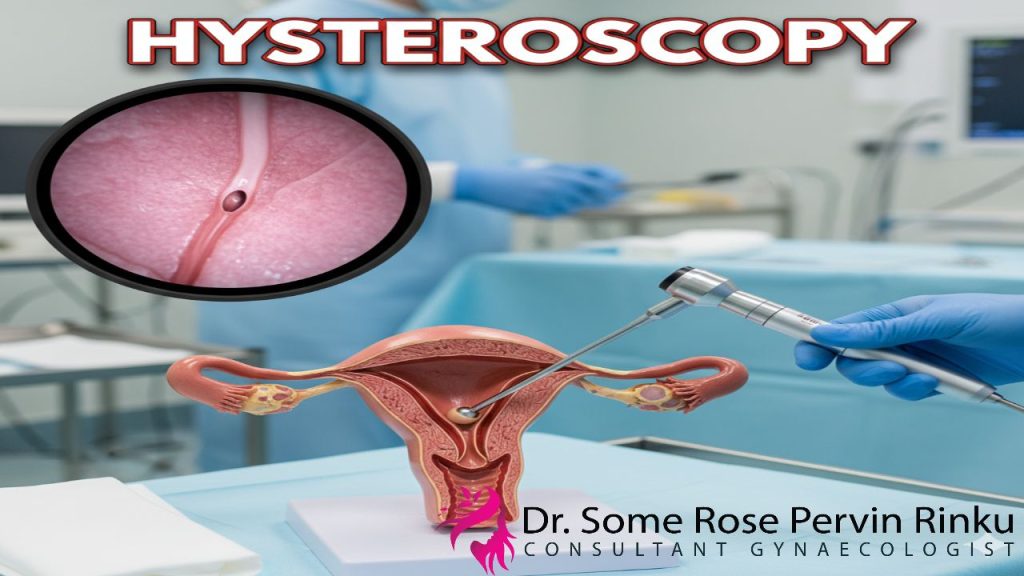
If your doctor tells you that you need a hysteroscopy, you probably don’t even know what to ask. This is a minimally invasive technique that has changed the way gynecologists diagnose and treat a number of uterine pathologies and now provide women with better answers and treatments than ever.
With a hysteroscopy, your doctor can look inside your uterus using a hysteroscope, a lighted, slim telescope. This is unlike other diagnostics that are dependent on imaging or guesswork, and instead these can give real-time and detailed images of your uterine cavity. Hysteroscopy may be the very ticket to the kind of information that has been denied to many women suffering with unexplained symptoms, such as heavy menstrual bleeding, fertility problems and presumed but unseen growths.
In this complete guide to hysteroscopy, you will learn everything you need to know; the procedure, recovery, and what you need to do afterwards. At the conclusion, you will know whether this procedure will help you and your unique problem.
What Is Hysteroscopy and Why Is It Performed?
Hysteroscopy is a procedure that lets your doctor look inside your uterus. A thin, flexible instrument called a hysteroscope is inserted through your cervix and into your uterus during the procedure. The hysteroscope is equipped with a light and camera that enables your doctor to see your uterine lining and cavity.
Hysteroscopy is employed by healthcare practitioners for both diagnostic and treatment reasons. A diagnostic hysteroscopy allows your doctor to determine what is causing signs and symptoms, but a therapeutic hysteroscopy allows your doctor to correct the problem at the same time.
Primary Uses of Hysteroscopy
Your doctor may suggest hysteroscopy if you have:
- Unusual menstruation, such as heavy periods or bleeding between cycles
- Pregnant with difficulty or habitual abortion
- Postmenopausal bleeding
- Other test abnormalities like ultrasounds
- Suspected fibroids, polyps or adhesions of the uterus
The technique has great potential over conventional diagnostic techniques. Although ultrasounds and M.R.I.s are helpful in providing images, they don’t always locate smaller abnormalities, or offer the detailed view that hysteroscopy gives. This direct observation assists doctors in diagnosing more accurately and planning targeted treatments.
What to Expect During the Hysteroscopy Procedure
Knowing the hysteroscopy procedure steps can help put your mind at ease. The majority of hysteroscopies are done on an outpatient basis, so you get to go home the same day.
Preparation Before Your Procedure
Your healthcare provider will tell you how to get ready for your hysteroscopy. These typically include:
- Scheduling the procedure for the week after you finish your period, when the lining of the uterus is thinnest
- Risks of induction: If you have a bishop’s score of 3-9, roughly 6 out of every 100 pregnant women may deliver in less than 7 days Taking certain medications to help soften your cervix if advised
- Having someone drive you home if you will be receiving sedation
- Not eating or drinking anything for a few hours before the test if general anesthesia will be used
During the Procedure
There are usually these steps for hysteroscopy:
First you’ll get in a similar position as the pelvic exam. Your doctor will then place a speculum inside you to hold open your vagina and clean your cervix. The hysteroscope is inserted through your vagina and cervix and into your uterus.
To help your doctor get a good look, they’ll insert a sterile fluid (typically saline solution) into your uterus. This fluid helps gently distend your uterine cavity so that the walls and any abnormalities can be seen more clearly.
Your doctor may use special tools inserted through the hysteroscope to treat smaller polyps or fibroids, or to perform other treatments at the same time.
What You’ll Feel
Most women say the pain is akin to menstrual cramps. Cramming may occur from the introduction of the hysteroscope or the expansion of the uterus with fluid, but it is usually of short duration. Your physician may provide you with pain relief medication or a local anesthetic to reduce any discomfort.
Conditions Diagnosed and Treated Through Hysteroscopy
In the case of hysteroscopy, it is especially useful for diagnosing and treating the uterine problems that may be resulting in the symptoms you are experiencing.
Uterine Polyps
These small, typically benign growths can form on your uterine lining and cause bleeding that is not regular. Polyps during hysteroscopy Your doctor can see polyps well through the hysteroscope, and often can remove them then and there with special instruments.
Uterine Fibroids
Not all fibroids can be treated with hysteroscopy, but those that develop in the uterine cavity (submucous fibroids) can often be removed this way. This may greatly reduce the volume of heavy bleeding and improve fertility recipes.
Uterine Adhesions
Asherman’s syndrome, also known as Asherman’s disease, is another name for these bands of scar tissue, which can develop inside your uterus after surgery or infection. Hysteroscopy helps doctors to locate and remove the adhesions delicately, potentially returning the function of the uterus back to normal.
Abnormal Uterine Shape
Some women are born with uterine irregularities that may impede fertility or result in pregnancy complications. Hysteroscopy can also be used to diagnose a condition, such as a uterine septum, which occasionally can be corrected during the procedure.
Endometrial Issues
The process yields a really good look at your uterine lining, which can help doctors spot conditions like endometrial hyperplasia or other abnormalities that may need to be addressed.
Benefits and Potential Risks of Hysteroscopy
Like any medical procedure, hysteroscopy has its benefits and potential risks that you should be aware of before you move forward.
Key Benefits
The hysteroscope has numerous advantages in comparison with other diagnostic and therapeutic modalities:
Minimally Invasive Approach: Hysteroscopy does not involve incisions, as many traditional surgeries do. The process is done through your normal body opening, which allows for faster recovery time, and less scarring.
Correct Diagnosis : Direct visualization leads to more accurate diagnosis compared to that by indirect techniques and that too shall affect the choice of treatment.
In-Services Treatment: Oftentimes a diagnosis and treatment can be completed in just one appointment, eliminating the need for various other visits.
Quicker Recovery: Nearly all women resume all normal activity in a few days versus several weeks of recovery from open surgery.
Outpatient Convenience: The procedure typically doesn’t require an overnight hospital stay.
Potential Risks and Complications
Hysteroscopy is typically a safe procedure, but passively read through the potential risks:
Infection: Any time you get poked around in your reproductive tract there’s a chance of infection. Your doctor will give you directions to help prevent this.
Uterine Perforation: There is a small risk of perforation of the uterus wall from passage of the hysteroscope or instruments. This is a rare incidence and happens in less than 1% of surgeries.
Bleeding: It is normal to have some bleeding after hysteroscopy, however, heavy bleeding requiring extra treatment is rare.
Absorption of the fluid: The fluid that is used to enlarge your uterus, sometimes may be absorbed into your bloodstream which may lead to other complications. Your medical team watches for signs of this during the course of the procedure.
Complications of Anesthesia: Whenever you receive sedation or anesthesia, there is always a very small risk of adverse reactions.
Your doctor will inform you about these risks and how they relate to you and your treatment. The advantages of hysteroscopic examinations override the possible disadvantages in the vast majority of women.
Recovery and Aftercare Guidelines
For the most part, recovery from hysteroscopy is easy as long as you follow your aftercare guidelines for healing.
Immediate Post-Procedure Care
Following your hysteroscopy, you’ll be in a recovery area, where you may be monitored by medical personnel. You might experience:
- Mild cramps that feel like menstrual cramps
- Light spotting or bleeding
- Mild lightheadedness if you had sedation
These are typical side effects and they usually disappear after a few hours.
At-Home Recovery Instructions
Your healthcare provider will give you specific instructions, but general guidelines include:
Rest and Activity: You are likely fit to restart mild activities the same day, but you should abstain from heavy lifting or exercising for 24-48 hours. Most people return to their work soon after the procedure.
Discomfort: Ibuprofen or acetaminophen can be taken in accordance with the package instructions to alleviate cramps. You can also employ a heating pad on the lower abdomen.
Hygiene: You can keep taking showers just avoid bathing, swimming, or tampons for about a week to prevent infection.
Sexual intercourse: Generally, you have to abstain from having sex for some days to a week, depending on your procedure Did It Go as It Should?
Normal vs. Concerning Symptoms
Light to moderate bleeding and cramping in the days to follow are normal. Nevertheless, reach out to your healthcare provider if you get:
- Heavy bleeding, which is more than one pad per hour
- Severe discomfort that does not respond to the medication
- Signs of an infection such as high body temperature, chills, or discharges with an unpleasant smell
- Unchanging nausea and vomiting
Follow-Up Care
Your doctor will schedule a follow-up appointment to discuss your results and any interventions that were done during the hysteroscopy. The meeting of such importance is useful if the samples of your tissue were collected for:
- Pathology results
- Any remaining symptoms
- Plans for a further examination if applicable
Taking the Next Step in Your Healthcare Journey
In summary, hysteroscopy is a remarkable innovation in women’s health, allowing a minimally invasive method of diagnosing and treating several uterine anomalies. It is an incredible solution for several women who have been grappling with unexplained bleeding, fertility issues, and many other causes of bother.
That it is both diagnostic and therapeutic at the same sitting makes hysteroscopy virtually indispensable to the modern gynecologist. Knowing what to expect can help you feel more prepared to tackle your hysteroscopy procedure.
If your doctor has suggested a hysteroscopy, feel free to ask about details of your individual case. All women are different and your doctor can give you personal information on what to expect relative to your symptoms and your medical history.
Just remember that by taking this step to learn about your reproductive health, you are investing in your health as a whole. With the right preparation and aftercare, hysteroscopy may provide the solution to problems that have been troubling you and may even bring positive changes to your life.