The prospect of gynecological surgery elicits a sort of mixed reaction in women, often relief and dread. Relief there is a treatment option available for them, but fear of large incisions, and long recoveries and visible scars. If that sounds at all familiar, you’re far from the only one — and you’ll be happy to learn that modern medicine presents a way out.
Nowadays, more than 80% of the gynecological surgical interventions can be performed by minimally invasive procedures. This innovative technique has revolutionized women’s healthcare, where equal therapeutic benefit has been achieved with less recovery time and fewer complications. But if you have fibroids, endometriosis, or require a hysterectomy, minimally invasive gynecological surgery could be the answer for which you’re looking.
In this guide, learn about the types of minimally invasive procedures offered, their incredible benefits, what to expect on your surgical journey, and whether you may be an ideal candidate for our advanced techniques. Find out how today’s surgery can get you back to feeling more like yourself—sooner than ever before.
What is Minimally Invasive Gynecological Surgery?
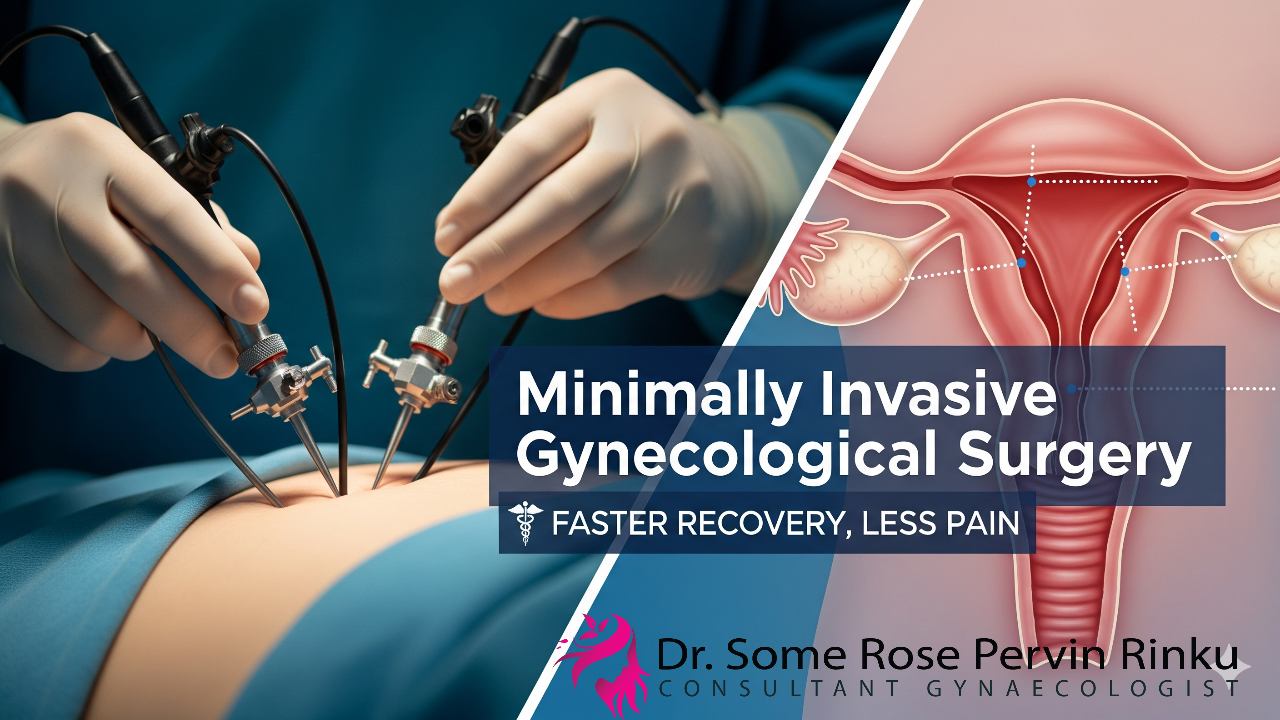
Laparoscopic gynecological surgery is a new departure from the conventional surgery methods. Rather than making larger, open cuts that can be multiple inches long, these procedures are conducted through small ones, an inch long or less for laparoscopic surgery, and smaller still, about a half-inch or less, for some robotic procedures. By means of specialized instruments and high-definition cameras, surgeons see and cut with extraordinary accuracy.
This is in stark contrast to conventional open surgery where surgeons are required to make long cuts to reach the surgical area. Picture the difference between peering through a keyhole and opening a whole door — both let you see what’s behind, but one is far less disruptive to everything around it.
The most common types of minimally invasive approaches are:
Laparoscopic surgery involves a small, lighted video camera that is inserted into the abdomen through an incision. This enables surgeons to see images of internal organs on a monitor while performing a procedure, using specialized instruments.
Hysteroscopic surgery is a type of procedure that enables the doctor to look at and perform surgery on the uterus, using a thin, lighted telescope (hysteroscope) that is inserted into the vagina and cervix. No external incisions are needed.
Robotic-assisted surgery combines traditional laparoscopic procedures with robotic technology, which provides a way for surgeons to have greater precision, range of motion, and control over movements all assisted by a computer.
The incision size is like night and day. Where traditional surgery might entail a 6-8 inch incision, minimally invasive surgeries usually utilize between 3-4 incisions that are less than half an inch in length. This little change yields more than just great news for patients.
Common Procedures Using Minimally Invasive Techniques
The variety of gynecological disorders which can be managed with minimally invasive surgery is increasing. There’s a wide range of the types of treatments you might see.
Hysterectomy
With traditional abdominal hysterectomy, you would need a large horizontal or vertical incision to the abdomen. Most hysterectomies today can be done laparoscopically or vaginally. Laparoscopic hysterectomy is the removal of the uterus through small abdominal incisions; vaginal hysterectomy is the removal through the birth canal with no external incisions needed. Both approaches have >95% success rates, and patient satisfaction scores are uniformly better than standard procedures.
Fibroid Removal
Uterine fibroids develop in 20–70% of women by the time they reach above 50 years of age. Laparoscopic myomectomy (LM) makes it possible to remove fibroids while preserving the uterus, especially in women who wish to preserve fertility. For women who are not considering having children, uterine fibroid embolization stops blood flow to the fibroid, and it will shrink on its own.
Endometriosis Treatment
Endometriosis, a condition that affects about 10% of reproductive-age women, is highly curable through minimally invasive therapy. With laparoscopic excision, endo tissue is cut out with precision; ablation destroys it, typically with heat or some other form of energy. Reports have found that 80%–90% of patients have significant decreases in pain after minimally invasive endometriosis surgery.
Ovarian Cyst Removal
The majority of ovarian cysts are removable through laparoscopic means, with conserving the healthy ovarian tissue. This is especially useful in younger women who wish to preserve their fertility and endocrine function.
Tubal Ligation
For long-term birth control, minimally invasive sterilization procedures make it possible for women to have same-day surgery with small cuts. The success rate is higher than 99%, making it among the most reliable objectives for contraceptive measures.
Key Benefits of Minimally Invasive Gynecological Surgery
The benefits of minimally invasive gynecologic surgery are not limited to small incisions. Here’s what you can expect:
Faster Recovery Times
The most noticeable advantage is a substantial decrease in the recovery period. While open surgery may take 6-8 weeks to recover from, minimally invasive surgery may take you back to your normal life in over 2-4 weeks. Most women are back to desk work within a week and to regular activities or exercise within 2-3 weeks.
Minimal Scarring
The small cuts leave very little visible evidence of healing. You won’t end up with a hideous scar across your belly, but rather 3-4 minuscule marks that usually all but disappear within several months. This is not just about appearances though – smaller incisions mean less damage to your abdominal muscles and fascia.
Reduced Pain and Discomfort
It is a well known fact that patients always express lower levels of post-operative pain with minimally invasive surgeries. This means less use of pain medication, less risk of pain medication side effects, and quicker return to easy motion. After the first few days, most women need only over-the-counter pain relievers.
Lower Complication Rates
Even if severe complications cannot be avoided, features like low invasiveness reduce the risk of complications. In open surgery infection rates decrease by around 50%. There is very little blood loss, and little transfusion is required. The chance of developing blood clots, pneumonia and the risk of impaired wound healing are all significantly reduced.
Enhanced Surgical Precision
Surgeons are supplied with crystal-clear, magnified views of the operating site from high-definition cameras — sometimes even clearer than the naked eye in open surgery. This better visibility leads to improved tissue handling, increased preservation of important healthy structures, and more complete excision of diseased tissue.
Sarah Martinez, a gynecological surgeon at Women’s Health Institute: “The accuracy that we have, with the minimally invasive techniques, is often greater than what we would have open. We can visualize things that would be difficult to see with open procedures, and that allows us to have better outcomes for our patients.”
What to Expect: The Patient Journey
Because the better you understand what goes into your minimally invasive gynecological surgery, the less anxious (or stressed, or overwhelmed) you are when it’s time to get a great outcome.
Before Surgery
Your experience starts with an extensive consultation during which your surgeon will review your medical history, conduct any needed exams and explain your treatment options. Pre-operative imaging, like ultrasounds and MRI scans, help your surgical team learn more about what to expect before they cut.
You will be given instructions on how to prepare, which often include:
- Stopping certain medications as directed
- Patient’s fast 8-12 hours prior to the operation
- Arranging transportation and post-operative care
- Completing any required lab work
Some of the pertinent questions to ask your surgeon are:
- How many procedures like this have you done?
- What risks and benefits will I face?
- What can I expect in the recovery process?
- When can I go back to work, be active, etc.?
During Surgery
The majority of minimally invasive gynecologic surgeries are completed in 1-3 hours when complexity is considered. You will be given general anesthesia to keep you comfortable during the procedure. Members of the surgical team are your surgeon, an anesthesiologist, and special nurses who have training in minimally invasive procedures.
Your abdomen is usually inflated with carbon dioxide gas during laparoscopic surgery to allow the surgeon to work safely. The gas is entirely evacuated before finishing, though prone patients feel transitory shoulder distress as residual gas is absorbed.
After Surgery
Recovery starts right away in the post-anesthesia care unit, where the medical team will closely monitor you, including your vital signs, and treat any pain. Most patients return home on the same day or spend one night in the hospital, depending on the complexity of the procedure.
Your recovery schedule usually goes something like this:
- During The First 24-48 Hours: Allow time to recover, and gradually increase movement and activity.
- Week 1 : Light activity and deskwork.
- Weeks 2-3: Slow mobilisation, no heavy lifting
- Weeks 4-6: Full healing and resumption of workouts and activities.
Keep your eyes open for these warning signs that you need to seek medical help right away:
- Fever above 101°F
- Heavy bleeding or unusual discharge
- Severe abdominal pain
- Signs of infection at the incisions
- Difficulty breathing or chest pain
- Is Minimally Invasive Surgery Right for You?
Are You a Candidate for Minimally Invasive Surgery?
The majority of women with indications for gynecologic surgery are ideally suited to minimally invasive techniques. Ideal candidates typically have:
- Good overall health status
- Realistic expectations about outcomes
- Conditions that can be treated safely using small incisions
- Lack of previous extensive open abdominal procedure leading to the formation of the abnormal fibrous tissue sipper (SHEARS).
- BMI in normal range (although this can vary by surgery)
There may still be some cases where people need more traditional open surgery, such as in:
- Very large fibroids or masses
- Extensive endometriosis with significant scarring
- Suspected cancer requiring comprehensive staging
- Emergencies of advanced large-incision surgery intervention
The best way to assess if you are a candidate is to consult with an experienced minimally invasive gynecologic surgeon. They’ll consider their patient’s specific condition, medical history and individual factors to recommend the best option.
Here are some questions to help you get started:
- What all my treatment options are, including noninvasive treatments?
- What is the success, or cure, rate for my specific condition?
- How will it impact my ability to have children or my hormones?
- What can I do to maximize my result following surgery?
- How do you keep up to date with the newest minimally invasive procedures?
Take the Next Step Toward Better Gynecological Health
Minimally invasive gynecologic surgery presents an ideal blending of effective surgical therapy with less time away from usual activities, smaller scars, and lower degree of complications. So if you’re struggling with painful periods, troublesome fibroids, or a need for hysterectomy, these cutting-edge techniques will help you get back to being healthy and happy in no time.
You just need to find an experienced surgeon who performs minimally invasive GYN procedures. Seek out board-certified gynecologists who have lots of experience with laparoscopic, hysteroscopic or robotic surgery. Many hospitals and surgery centers now feature their minimally invasive expertise, making it easier for potential patients to find qualified practitioners.
If you need treatment, don’t let your fear of old-fashioned surgery hold you back. Consult a board certified gynecological surgeon regarding minimally invasive alternatives available to you. Be ready to ask questions about your particular case and how the treatment is given. Remember: these are modern, extremely safe minimally invasive operations specifically designed to get you back to your life as soon as possible.
If you’d like to learn more about minimally invasive gynecological surgery, head to a trusted site such as the American College of Obstetricians and Gynecologists (ACOG) or AAGL (formerly the American Association of Gynecologic Laparoscopists). These deals are vetted to ensure they’re based on reputable sources that deliver real savings, and finally put some power back in your wallet when it comes to your health.
Your well-being is important and now, there are minimally-invasive gynecologic surgery options available so you don’t have to compromise total treatment and rapid recovery. Start the process now and book that consultation — your future you will thank you.