
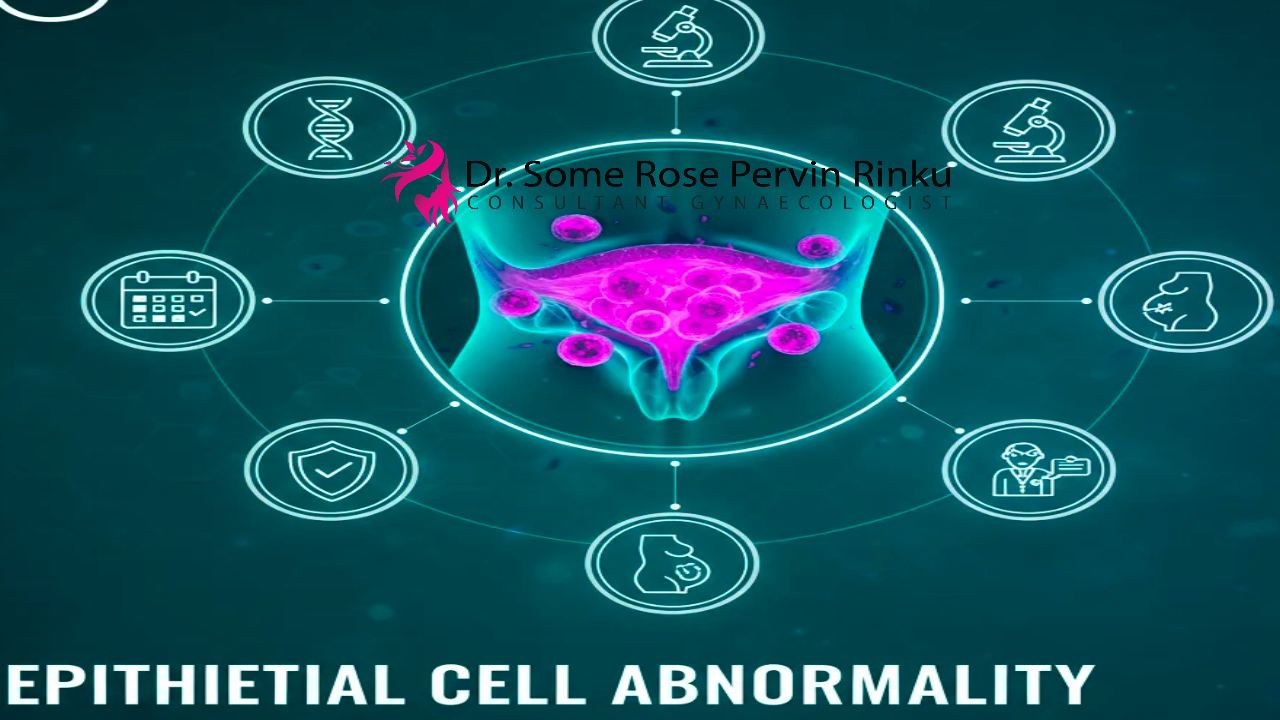
Imagine your body being a magnificent house. Epithelial cells are the good paint, tile or wallpaper that lines every surface inside and out. They are the hardest workers in your body because they produce your skin, the lining of your digestive tract, your lungs and all of your organs. As the first line of defense for your body, they form a living “shield” over around 60% of you!
They block the bad stuff from getting inside, determine what should be taken up and produce crucial secretions.
But what happens when these crucial cells get a little confused and start growing or changing in ways they aren’t supposed to? That’s what we mean by an epithelial cell abnormality. Sounds scary, but those are typically the very first thing your body is presenting to you. It is important to know what it means to help keep your health in check.
This guide will answer those questions and outline what might cause such changes, the signs to watch for and how doctors deal with them in five simple steps.
What Exactly Are Epithelial Cell Abnormalities?
The epithelium is a beautiful, neat brick wall. An epithelial cell abnormality occurs when the cells, which are sort of like bricks, begin to assume a different appearance. They could enlarge or shrink, change shape or become less organized.
Some of these shifts can vary. Some are benign and self-resolving, like a minor issue that rights itself. The other symptoms are more serious and could result in a pre-cancerous or cancerous condition.
Doctors determine this by examining your cells with a powerful microscope. They can do that with relatively simple tests like a Pap smear or a biopsy. For your cellular health you NEED to know what those changes are!
Understanding the Medical Lingo
When they talk about an abnormality, your doctor will use certain words to describe how bad the change is. Here is a simplified version of some of the most common phrases:
- Atypia: This the least severe form. It’s just a way of saying that the cells look abnormal or atypical. They’re not always terrible, but you do need to examine them more carefully and perhaps simply check once more later.
- Dysplasia: In this case, the changes are distinct. Physicians grade it mild, moderate or severe. Mild dysplasia may resolve on its own, while severe dysplasia is the most worrisome as it is more likely to progress to cancer if left untreated.
- Carcinoma in situ: Not to get upset by the scariness of “carcinoma”! It is cancer at an early stage that is not invasive. There are still some unhealthy cells, but only in the original tissue layer. They have not spread or broken out … yet. Usually this is easy to treat.
- Invasive Carcinoma: The abnormal cells have penetrated the original barrier and begun invading contiguous healthy tissue. This is called invasive cancer.
Why Do These Changes Happen?
An epithelial cell problem is rarely a matter of just one thing. Unfortunately, it’s never just one thing, not even when a person is: genetics working alongside lifestyle falling perfectly into the crook of the environment.
The biggest problems are:
- Infections: Viruses play a big role in it! The Human Papillomavirus (HPV) is the main agent underlying changes to cells in the cervix, anus and throat. Hepatitis B and C are two additional viruses that can transform liver cells.
- Chronic Irritation or Inflammation: If a part of your body is constantly under attack, the cells there get stressed out. For instance, smoking can irritate the lung lining and acid reflux can injure the esophagus over time, both conditions damaging organs that may ultimately new cells associated with cancer (in stage zero); voice box (in situ); colon; or intestinal cell development), cellular changes in organ-tissue types.
- Environmental Exposure: Anything that damages your cell’s DNA can have an effect. So are some industrially made chemicals, tobacco smoke and too much sun (or ultraviolet radiation).
- Genetics: Some people just have cells that are more likely to change. It could be that you have a higher chance of getting cancer if it is in your family.
- Compromised Immune System: Your immune system is like a quality control crew. If it isn’t doing what it’s supposed to, the immune system may not be able to find and destroy these errant cells before they grow bigger.
The Symptoms: What to Watch For
Here’s the tough part: At the outset, abnormalities in epithelial cells usually don’t cause any symptoms. That is why follow-up appointments with the doctor are necessary to find problems early.
If they do, symptoms will appear based on where the alterations are:
| Location of Abnormality | Key Symptoms to Notice |
| Cervix | Abnormal vaginal bleeding, pain during sex, or unusual discharge. |
| Skin | A new mole, a sore that won’t heal, or a change in an existing spot’s size, shape, or color. |
| Lungs | A persistent cough, shortness of breath, chest pain, or coughing up blood. |
| Colon | Changes in bowel habits, blood in the stool, or unexplained stomach pain. |
| Mouth/Throat | A persistent sore throat, difficulty swallowing, or a white/red patch that won’t go away. |
Bottom line: These signs can be caused by many less serious things, but if you notice any of them sticking around, don’t ignore them. Talk to your doctor.
Diagnosis and Your Treatment Plan
If your doctor suspects you have a disease, the next step is clear: He or she needs to check it out and figure out how bad it is.
How Doctors Get Answers
- Screening Tests: The Pap smear, HPV test and mammogram are all easy tests to find problems early.
- Biopsy (The Definitive Test): This is the most superior test. A small piece of tissue is removed and examined under a microscope. This is what allows your doctor to gauge if you have it and how bad (mild, moderate, etc.).
- Imaging: CTs, MRIs or endoscopies could be used to take a better look inside.
Treatment: Simple to Complex
Simple email to severe abuse: Treatment is always specific to the problem. For mild abnormalities that might get better on their own, your doctor may simply say “watch and wait,” monitoring you at check-ups to see how things play out.
The objective is usually to eliminate the abnormal cells while sparing healthy tissue when the changes are more apparent. You can do this using:
- Topical Creams: For some skin issues.
- Removal Procedures: Removing the bad spot by cutting it out with freezing (cryotherapy), a laser or a simple surgical excision. LEEP (Loop Electrosurgical Excision Procedure) It is a common cervix procedure.
If the abnormality is confirmed to be invasive cancer, your treatment will involve a more comprehensive approach, such as surgery, radiation, or chemotherapy.
Taking Charge of Your Cellular Health
It’s natural to feel intimidated by terms like “epithelial cell abnormality,” but remember this: detection is the best defense. Most abnormalities are highly treatable, especially when caught early through simple screening.
Take care of your health. Don’t skip your regular check-ups, and if you see something odd that won’t go away — a spot, a cough or otherwise out-of-the-ordinary symptoms — call for an appointment without delay. Together, you and your doctor are trying to ensure that your body’s front line workers stay well.
And do you have any questions about any of the screening tests, like Pap smear, or any of the conditions?



